
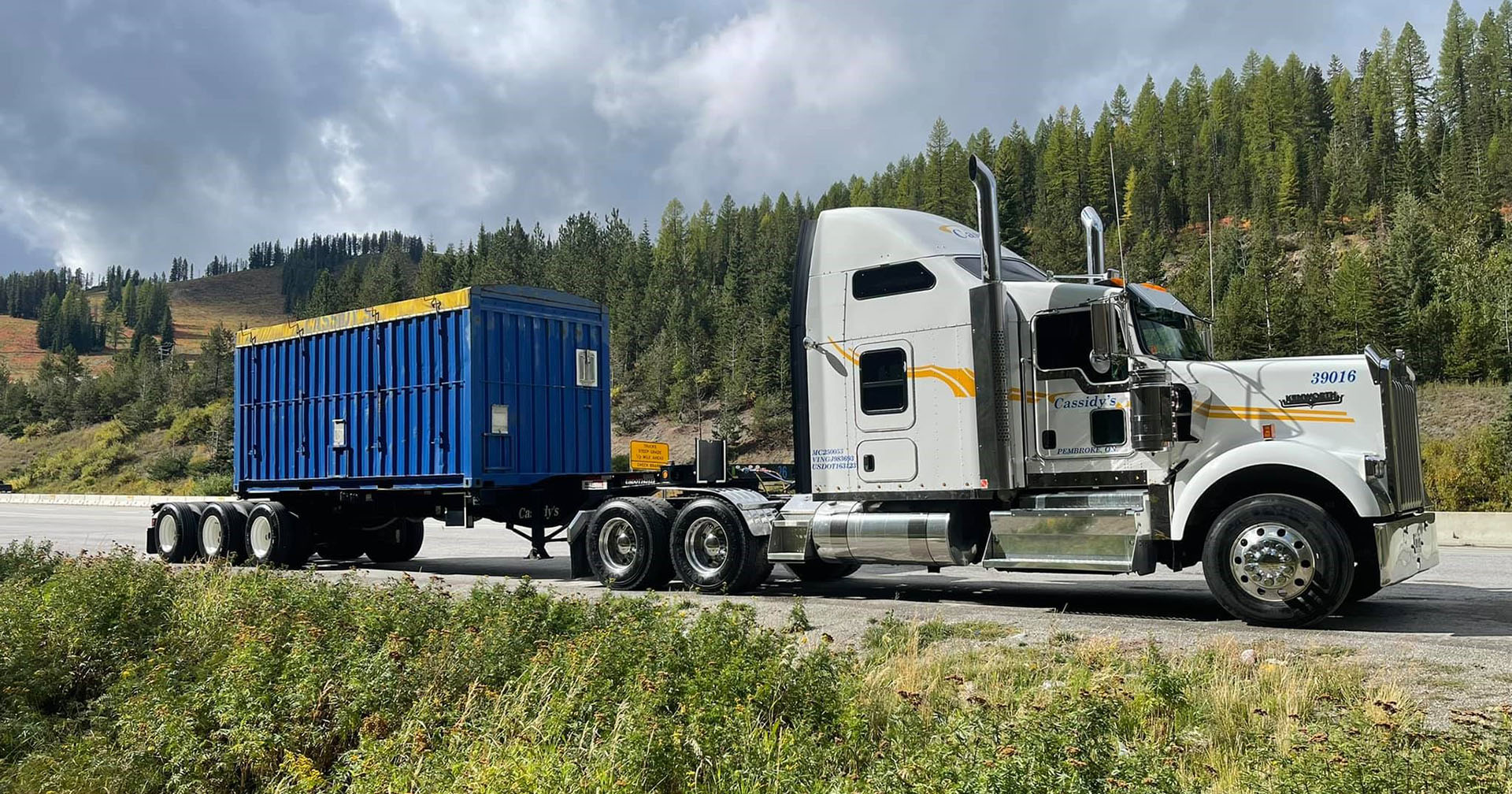
You’ve heard the term “sea can” tossed around or maybe someone told you to look into a “c can” for buying and renting storage containers, but when you search online, everything says “shipping container.”
So, c can vs. sea can… which is it?
The short answer: they’re all the same thing. Depending on who you’re talking to, the same product gets called a sea can, c can, storage bin, or shipping container: different names, same steel box.

Free Ultimate Moving Checklist
Say goodbye to moving stress with our 2025 residential moving checklist for Canada—it’s the ultimate time-saver!
Download NowWhat matters more is choosing the right one for your situation.
By the end of this guide, you’ll know exactly what a sea can (or c can) is, which term to use, what size you need, and whether renting or buying makes the most sense.
So What IS a Sea Can?
A sea can is a standard shipping container. Full stop.
If someone in Ottawa or the Ottawa Valley mentions a “c can” or “sea can”, they’re talking about the same large steel containers you see stacked high on cargo ships.
The term “sea can” is primarily Canadian. It comes from the sea container’s original purpose of transporting goods across oceans. “Sea” refers to maritime shipping, and “can” reflects the sealed, durable structure.
Over time, the name stuck locally, even though the global industry standard is “shipping container.”
These containers can handle extreme conditions. They feature:
- Corrugated steel walls for strength
- Weatherproof seals to keep contents dry
- Reinforced frames designed to be stacked 9–12 units high
Since they’re engineered to survive ocean crossings, that same durability makes them ideal for storage on land.
Standard sizes are 10 ft, 20 ft, and 40 ft. Those are the same three sizes Cassidy’s offers for both rent and sale in Ottawa and the surrounding area.
Sea Can, C Can, Storage Bin, Shipping Container: Why All the Different Names?
Here’s where the confusion comes in, and why you’re seeing different terms online.
Shipping Container
This is the global, industry-standard term. It’s what you’ll see on Google, logistics websites, and international shipping platforms. It describes the container’s original purpose: transporting goods.
Sea Can
This is the Canadian go-to. It’s short, memorable, and rooted in how these containers were used: on ships. Across Ontario, BC, and the Prairies, this is the most common everyday term.
C Can
This is simply shorthand for “sea can.” The word “sea” gets shortened to “C” in casual conversation. Same meaning, just faster to say.
Storage Bin
This term focuses on how the container is being used, not where it came from. People often use it when the container is staying in one place for storage rather than transport.
Rest assured that no matter what you call it, you’re talking about the same thing.
Here in Ottawa and the Valley, you’ll most often hear people say ‘sea can’ or ‘c can’, and that’s totally fine. Our team at Cassidy’s knows exactly what you mean.
What Size Do You Need?
Choosing the right size of shipping container is the most important practical decision. We offer three standard sizes, each of which fits a different type of need.
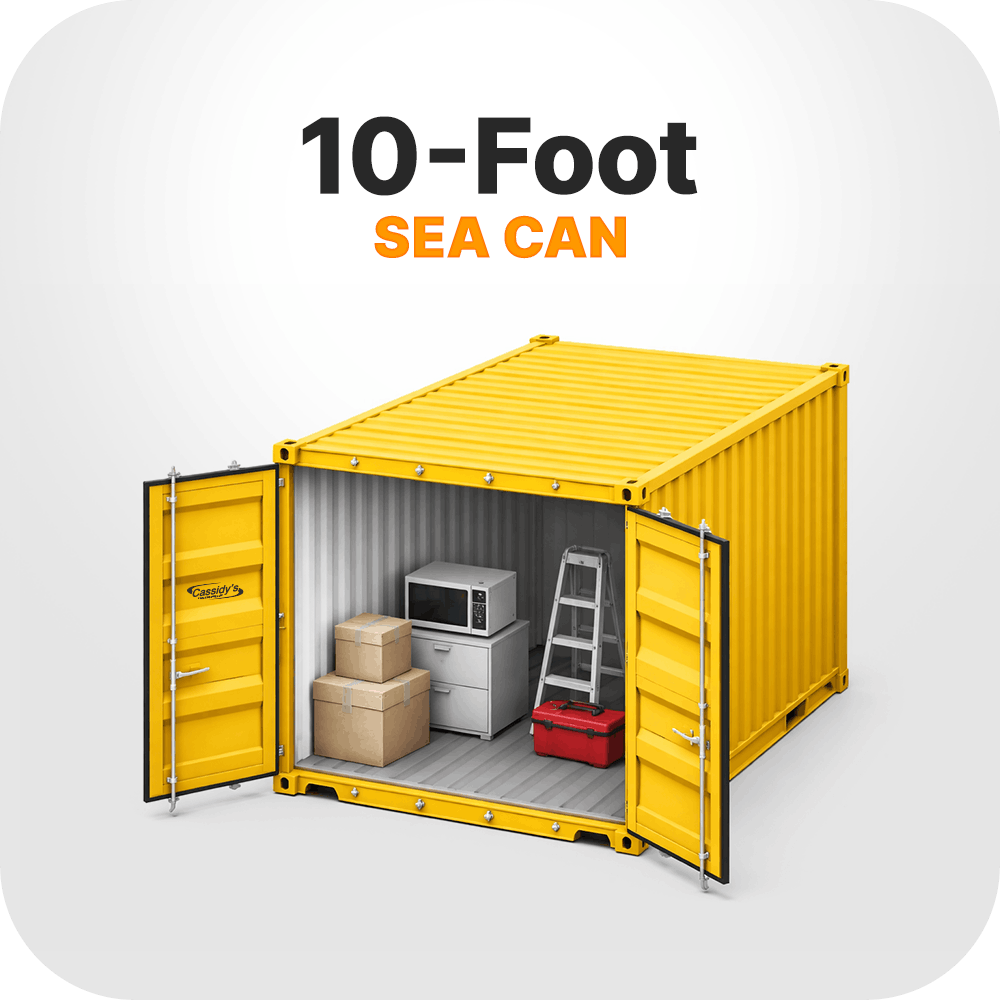
10 ft Sea Can
Think of this as a large storage shed.
- Ideal for: garden tools, seasonal items, small furniture
- Rough comparison: half the size of a one-car garage
This size fits comfortably in most driveways without taking up too much space. If you just need extra room without committing to something massive, this is a great entry point.
20 ft Sea Can
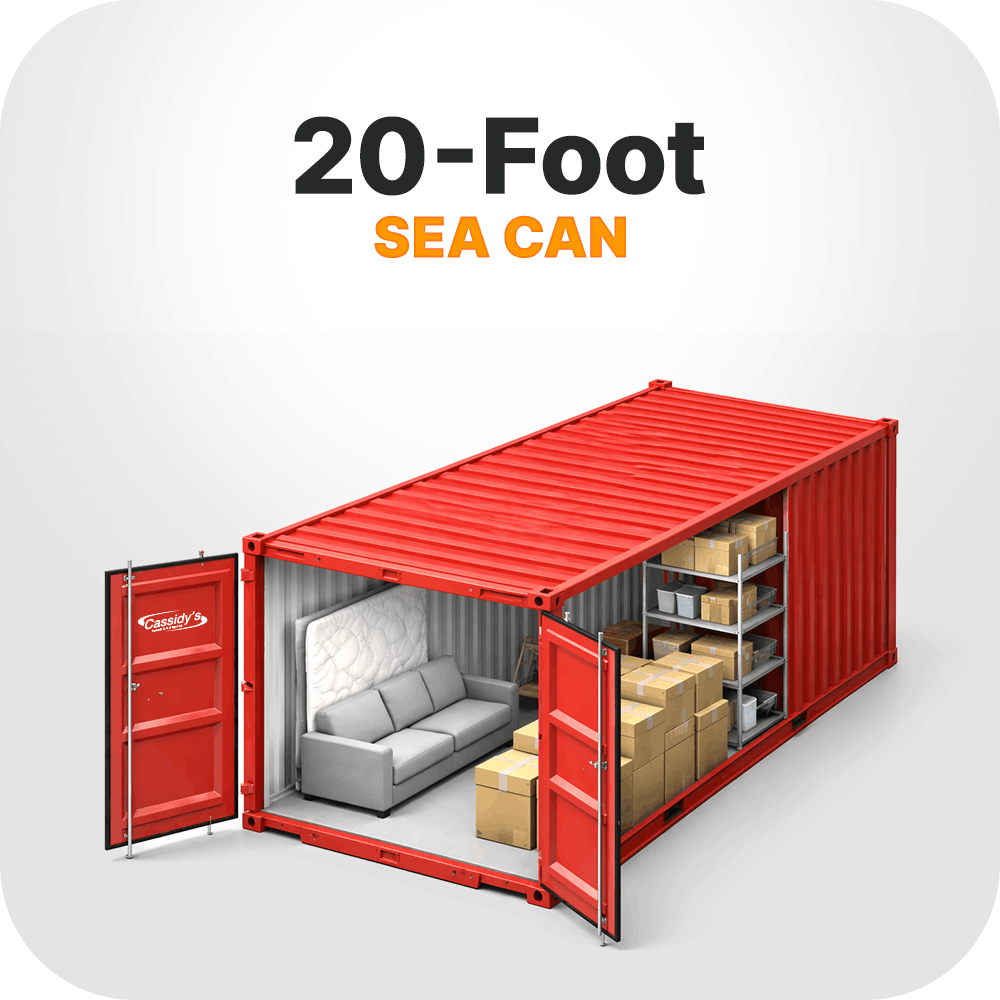
This is the most popular and the most versatile.
- Ideal for: home renovations, job sites, small business storage
- Rough comparison: 1–2 bedroom apartment
To put the size in perspective: picture two large SUVs parked bumper-to-bumper. That’s roughly the length of a 20-ft container.
If you’re unsure what size to choose, this is usually the safest bet.
40 ft Sea Can
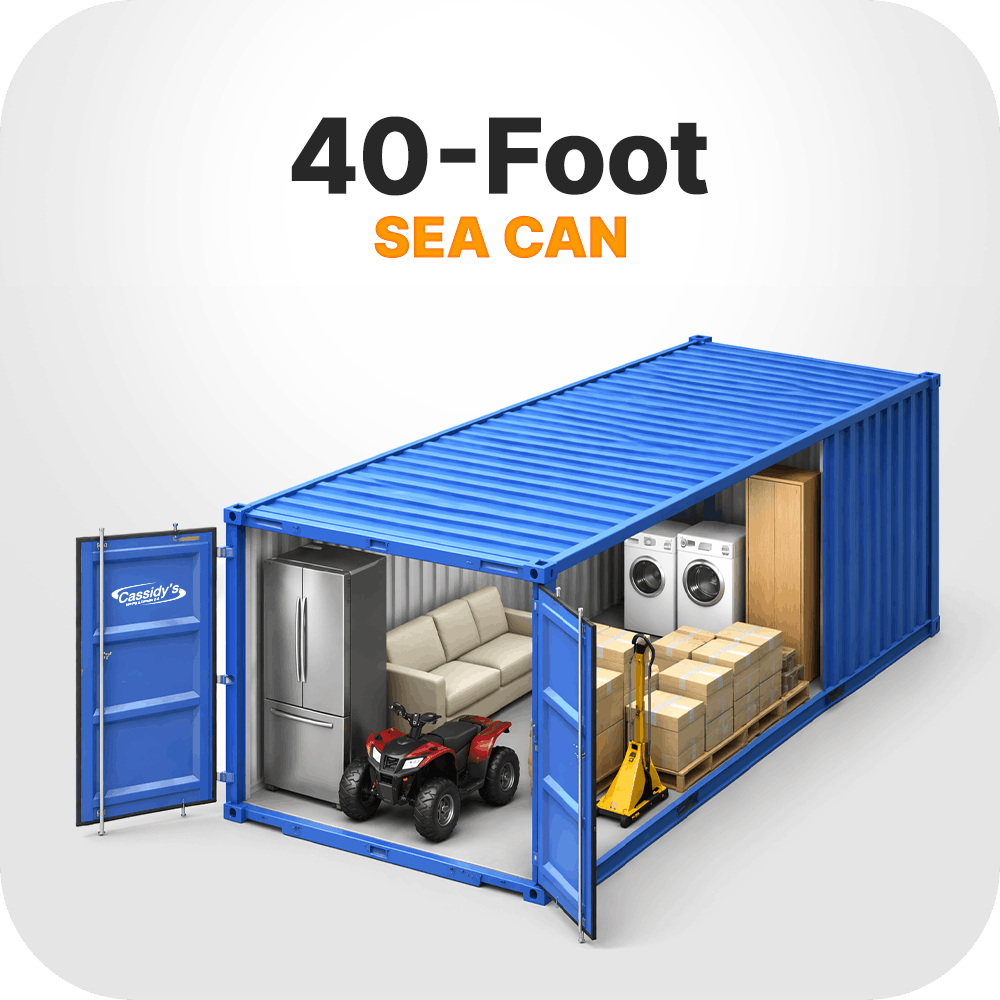
This is the heavy-duty option for maximum capacity.
- Ideal for: large moves, construction sites, commercial storage
- Rough comparison: similar in length to a highway transport trailer
Double the length of the 20 ft, a 40 ft container is the right call for larger household moves, commercial storage, or construction sites with heavy equipment. When you need serious capacity, this is the size.
Storage containers are becoming more popular as an alternative to traditional self-storage due to their convenience and flexibility. According to projections from Grand View Research, Canada’s self-storage market is expected to reach US$4.3 billion by 2030.
Renting vs. Buying: What Makes Sense?
If you’re new to sea cans, this is usually the next question.
Here’s a simple way to think about it.
Renting is best if:
- You need storage for a few months
- You’re renovating, moving, or managing a short-term project
- You want delivery and pickup handled for you
Renting keeps things flexible and predictable.
Buying is best if:
- You want a permanent storage solution
- You need ongoing storage for your business
- You plan to modify or customize the container (like turning one into a home or workshop)
Owning gives you long-term control with no recurring rental costs.
Cassidy’s offers both rental and purchase options for shipping containers in Gatineau & the Ottawa Valley. If you’re unsure which direction to go, our team can walk you through the general timeline, space requirements, and cost of shipping containers.
Why Choose Cassidy’s?
Cassidy’s Moving & Storage has been serving Ottawa and the surrounding region since 1908. That kind of longevity isn’t just a number; it reflects deep local experience.
Delivering a shipping container isn’t as simple as dropping it off. It requires:
- Understanding driveway access and clearance
- Navigating tight suburban streets or rural properties
- Placing the container safely without damaging your property
From narrow residential driveways to job sites with limited access, our experienced team knows how to handle real-world delivery challenges efficiently.
Here are even more reasons to choose Cassidy’s:
- 10 ft, 20 ft, and 40 ft containers available
- Rental and purchase options (new and used)
- BBB A+ rating
- Canadian Association of Movers member
- Air Miles rewards partner
Working with a local company also means faster delivery, better support, and a team that understands Ottawa’s terrain, weather, and logistics.
Whether you’re storing furniture, running a job site, or setting up a long-term solution, we’ve been doing it since 1908. We’d love to help you get it right the first time.
Work With Cassidy’s
Whether it’s c can or sea can or shipping container, or storage bin: they’re all the same steel box.
What matters most is choosing the right size, deciding whether to rent or buy, and working with a team that can deliver it properly.
Ready to rent or buy a sea can in Ottawa or the Ottawa Valley?
Contact Cassidy’s Moving & Storage for a free quote. Call 613-836-4225 or request a quote online.
