

Table of Contents
If you’re weighing a new vs used shipping container, here’s the short answer:
A used shipping container costs about 30-50% less and lasts just as long structurally, so buying used is the right choice for most storage needs. Buying a new container is worth it when its appearance matters, when its cargo history is a factor, or when you’re planning heavy modifications.
The three deciding factors to help you choose are its intended use, your budget, and how long it needs to look good. The great news is that supply is on your side. The Port of Montreal, Ontario’s closest major container gateway, handled 1.52 million TEUs in 2025, up 3.6% compared to 2024.

Free Ultimate Moving Checklist
Say goodbye to moving stress with our 2025 residential moving checklist for Canada—it’s the ultimate time-saver!
Download NowWe’ve been storing belongings for Ottawa Valley families and businesses since 1908. While this is the storage question we answer most, let’s start where most buyers get tripped up: that “new” doesn’t mean what you’d think.
What “New” and “Used” Actually Mean in the Container Industry
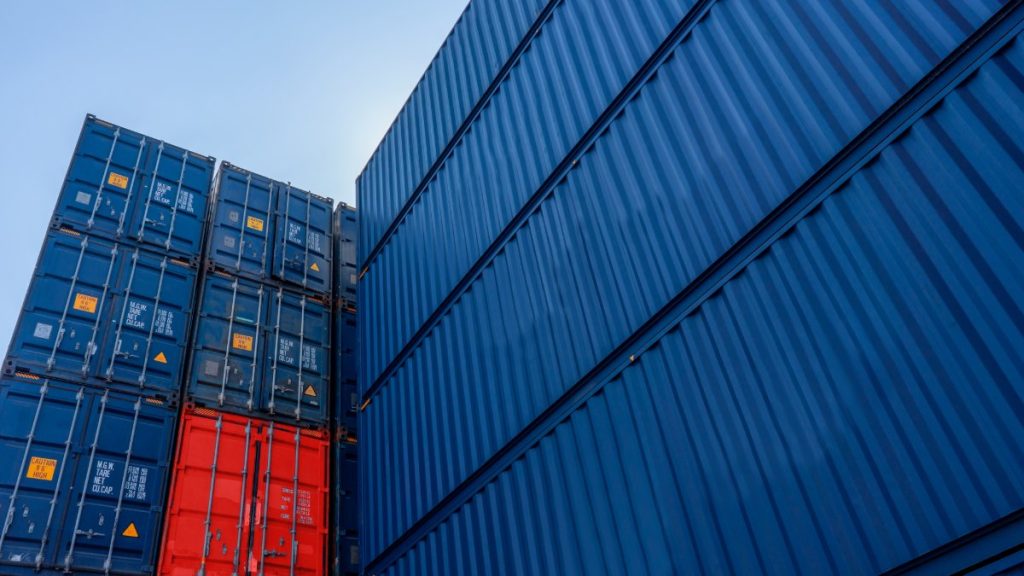
The vocabulary confuses almost every first-time buyer: in this industry, “new” does not mean unused. If the term “sea can” is new to you as well, here’s what a sea can actually is.
New (One-Trip) Containers
A “new” container is a one-trip container:
- Built in Asia
- Loaded with cargo once
- Shipped across the Pacific
- Sold at the destination instead of returning empty
It’s factory-fresh in every way that matters: clean interior, tight seals, unmarked floor, often a manufacturer’s colour, but it has technically made one loaded trip across the ocean.
A container that has never held cargo is rare in the Canadian market.
Used Containers Are Not One Category
The term “used” covers three different grades.
- Cargo Worthy (CW). Certified structurally sound enough to still carry cargo by sea, with a valid CSC plate. CW is the only used grade eligible for international shipping.
- Wind and Water Tight (WWT). Guaranteed to keep wind and water out. The exterior shows its age, but the inside stays dry. This is the workhorse grade for on-site storage.
- As-Is. Sold in the condition it sits, with no guarantee. It’s the lowest price, and can be a fine choice if you thoroughly inspect it yourself.
Why Age Is Not the Same as Grade
A well-maintained fifteen-year-old container can outperform a newer one that sat in salt spray for a couple of years. Ultimately, the grade comes from an inspection rather than a manufacture date.
So, don’t only ask the seller how old it is. Ask what the inspection found about the condition of the roof, floor, door gaskets, and base rails. A seller who can answer that in detail is one who actually looked at the container you’re about to buy.
New vs. Used Shipping Container Cost in Ontario
These are cost ranges for new vs used shipping containers in Ontario for 2026.
| Grade | Condition | Best for |
| As-Is | Sold as it sits. Dents, surface rust, or a stiff door are all possible | Lowest-budget static storage where appearance doesn’t matter |
| Wind and Water Tight (WWT) | Keeps wind and water out, with visible cosmetic wear | Everyday on-site storage: tools, equipment, inventory, seasonal gear |
| Cargo Worthy (CW) | Certified structurally sound to carry cargo by sea | Storage you may relocate later, or anything shipping internationally |
| One-Trip (New) | Near-new. One voyage, clean interior, more colour options | Customer-facing placement, conversions, and heavy modification |
Our guide to the cost of shipping containers breaks down what moves these prices, or request a shipping container quote, and we’ll price the actual unit.
What Drives the Price Gap
The prices of the two sea can categories are based on different markets, which is why the gap doesn’t close. New shipping containers track factory costs, ocean freight, and import costs. The used market is priced off depot supply and repositioning, which is how many empty boxes are sitting in North America with nowhere profitable to go.
At the Port of Vancouver, empty container volumes rose 11% to 857,343 TEUs in 2024. Sending an empty box back across the Pacific often costs more than it’s worth, so it gets sold off instead. That’s why a decades-old steel container is affordable at all.
Why Canadian Pricing Is Not American Pricing
Most container price guides online are written for buyers in Texas or Florida, and the numbers don’t translate to Canadian buyers.
Containers also trade in US dollars, and with the Canadian dollar near $1.39 to the US dollar in August 2026, every imported box costs more here before it even moves.
Ottawa isn’t a port city either, so a container heading to Kanata or a farm outside Renfrew has already travelled inland from Montreal, and that haul is priced in. Eastern Ontario depots also carry thinner inventory than the coastal yards those guides quote from.
Lastly, HST applies, so a US price quoted without sales tax isn’t comparable either.
Delivery, Placement, and HST
Across Ontario, local delivery typically runs $200 to $400 for hauls of roughly 100 kilometres or less. Always ask whether a quote refers to the container only, or the container with delivery included.
A tilt-bed truck needs roughly 100 feet of straight, clear space to set the box down level, plus overhead clearance from wires and branches, on firm, reasonably level ground, ideally on gravel or corner blocking.
Soft spring ground, a slope, or a snowbank narrowing the laneway can turn an easy delivery into a rescheduled one, so we’d rather review your site first.
Head-to-Head Comparison
| Factor | Used | New (One-Trip) |
| Purchase price | 30 to 50% less | The premium option |
| Cosmetic Condition | Dents, patched repairs, faded or mismatched paint | Near-flawless, uniform factory colour |
| Structural Lifespan | Decades with basic maintenance | Decades with basic maintenance |
| Rust Risk | Existing surface rust needs monitoring and spot treatment | Minimal at purchase, same exposure from day one onward |
| Interior & Flooring | Serviceable, may show stains, gouges, or past repairs | Clean marine plywood floor, unmarked walls |
| Suitability for Modification | Workable, but rusted or patched steel complicates cutting and welding | Easiest and safest to cut, frame, and insulate |
| Eligible for International Shipping | Cargo Worthy only, with a valid CSC plate | Yes |
| Resale Value | Holds value well, little depreciation left to lose | Drops toward used-market value once it’s yours |
| Environmental Footprint | Reuses steel already in circulation | Requires new steel production |
When a New Container Is Worth the Premium
Pay for a new shipping container when:
- The container will be seen. Retail, pop up shops, and front-of-property placements get judged on appearance, and a patched box looks like neglect.
- You’re converting it to a living space or office. A clean interior saves the stripping and sealing, and that labour offsets much of the price difference.
- Cargo history matters. For food-grade or sensitive storage, a known single load beats a box whose previous contents nobody can tell you about.
- You want maximum good-looking years. Factory condition buys longer before appearance becomes a maintenance job.
- You’re planning heavy modifications. Cutting clean steel is faster and safer than cutting around rust, and fabricators charge accordingly.
When a Used Container Is the Smarter Buy
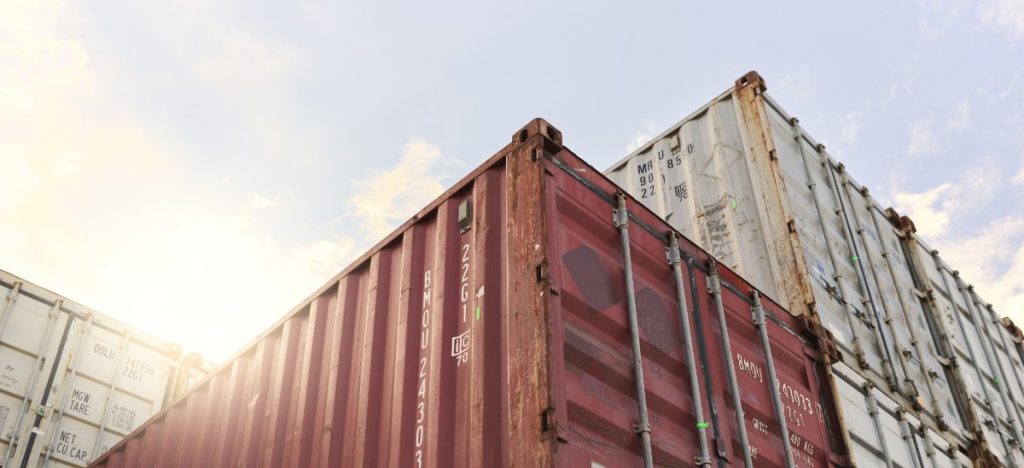
For most people, buying used is the better purchase:
- General dry storage. Tools, equipment, and inventory overflow don’t care what the outside looks like.
- Construction and job site storage. Security and durability are what count, and it’s far less concerning when cosmetic damage inevitably happens.
- Farm and agricultural storage. Around the Ottawa Valley, used containers make excellent rodent-resistant, lockable storage for feed and equipment. The Government of Ontario notes that a single rat can contaminate 10 times the amount of feed it eats, supporting the need for rodent-proof storage.
- Short to medium term needs. For a renovation, a move, or a couple of seasons, the extra cost of new may not pay you back.
- Budget projects. The thousands you can save on a 20-foot unit fund the shelving, vents, and site prep that make it useful.
- Sustainability-minded buyers. A used container puts existing steel back into use instead of requiring new production.
How Long Does Each One Last?
Structurally, both last decades. It’s the same Corten weathering steel either way. What new buys you isn’t a longer life; it’s more good-looking years before the rust and dents show.
What Actually Kills a Container in Ontario
Almost nothing on a container fails from age alone. In Ontario, four things do the damage:
- Freeze-thaw cycling. Water works its way into a paint chip, freezes, and then lifts the coating. A few hundred cycles a winter turn blemishes into rust-through.
- Road salt. Spray from a salted laneway reaches the base rails, exactly where corrosion is hardest to spot and most structurally important.
- Standing water and snow load. Roofs are strong but not domed. Water pools in a depression and rusts from above, and heavy Valley snowfall deepens the dent, so it pools even worse next year.
- Condensation. Ontario’s humidity swings can produce container rain: warm, moist air hits cold steel overnight, and it drips onto what you’ve stored. It can ruin contents if ventilation and moisture control are poor.
Rest assured, the fixes matter more than the grade you bought. Store the container on gravel or corner blocks so air moves underneath, slope the ground away from it, ensure vents are clear, and keep the roof clear of debris and heavy snow.
Maintenance That Extends Either One
Treat rust spots while they’re still spots, with a wire brush, primer, and touch-up paint. Check the roof once a season for pooling. Keep the door gaskets clean and lubricated, and open the doors periodically over the winter, so the locking rods don’t seize.
What to Inspect Before You Buy a Used Container
Never buy a used container unless you or someone you trust has inspected it.
At Cassidy’s, every shipping container goes through a detailed pre-sale inspection. Here’s what we check to ensure everyone knows the true condition of the sea can.
- Roof: Standing water, ponding dents, and deformation from a past snow load.
- Floor: Marine plywood solid underfoot, with no soft spots, deep gouges, or staining.
- Door seals and locking rods: Squeeze the gaskets. Cold-weather cracking is common on containers that have wintered here, and a perished gasket turns a wind- and water-tight box into a wet one. Work the rods through a full cycle.
- Base rails: Salt corrosion along the bottom rails. This is the most commonly skipped check, and the most expensive to get wrong.
- Corner castings: Intact and undeformed, since they carry the weight during lifting.
- Walls: Sight down each side for straightness, rust-through, patches, and previous welding. Dents are cosmetic. Light through a wall is not.
- Ventilation: Factory vents clear, and consider whether you need more.
This is also where scams get caught, so buy from a company you can visit rather than a seller who wants full payment up front.
Ontario Permits, Zoning, and Placement
Rules for placing a shipping container vary considerably across Ontario. What applies to you depends on your zoning, not on the container, so it’s important to call your municipality before you purchase.
Some municipalities treat a shipping container as an accessory structure, which brings in a building permit, setbacks from lot lines, and lot coverage limits. Others regulate how long one may stay on a residential lot, or restrict them in certain zones entirely.
Agricultural and industrial properties generally face fewer restrictions than residential ones, but a quick phone call to your by-law office costs nothing and can save a massive headache of relocating a container later.
Tell us where you’re thinking of putting it, and we can advise on siting, access, and drainage.
Choosing the Right Container With Cassidy’s
The best choice for a new vs used shipping container boils down to three questions:
- Will anyone be looking at it?
- Do you need to know exactly what’s been inside?
- Are you cutting into it?
If the answer to all three is no, then buy a used container and put the savings toward site prep and shelving. If any one is yes, a new sea can is likely worth the difference.
After storing what matters to Ottawa Valley families and businesses since 1908, we’d rather point you to the grade that fits your project than the one that pads our margin.
Request a shipping container quote or call us at 613-836-4225, and you’ll talk it through with someone who has placed containers on properties from Barrhaven to Pembroke.
